Community Journal
Welcome to our Community Scrapbook – a living record of the people, places, and stories shaping the planning and delivery of High Bourn.
This scrapbook belongs to the community: residents, families, schools, historians, and neighbours. It will grow as the development evolves, capturing milestones and memories along the way.
Add your voice today!
What do you hope for High Bourn? Let us know by uploading your content, ideas or suggestions.
"*" indicates required fields
Supporting Local Talent
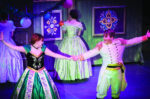
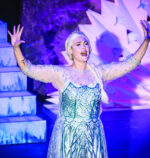
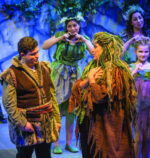
In March 2026, we were proud to support the Bourn Players’ production of Disney’s Frozen at Comberton Performance Hall. Our funding helped cover production and lighting costs, supporting the dedicated volunteers, performers and backstage team who brought the show to life. The performances were a wonderful celebration of local talent, creativity and community spirit.
 “Strong communities are built through shared experiences, creativity and local involvement. We were delighted to support the Bourn Players and everyone involved in bringing this fantastic production to the stage.”
 Jon Kenny, Greycoat



Championing inclusive design
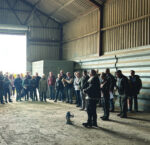
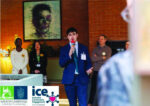
In January 2026, we were delighted to support and attend the Inclusive Design Festival, hosted by the Greater Cambridge Shared Planning Service. Our involvement reflects our ongoing commitment to inclusive planning at Bourn Airfield, ensuring that a wide and diverse range of voices are welcomed, heard and reflected in shaping the place.
The festival provided an important opportunity to engage with practitioners, partners and communities on how inclusive design can help create better places for everyone.
The Inclusive Design Festival was a fantastic opportunity to share ideas and learn from others about how we can make places more accessible, welcoming and inclusive. These conversations are essential in shaping the future of Bourn Airfield.
Noah Khogali



A disastrous blanket of fog smothered British airfields just as Bomber Command crews returned from Berlin, leading to unprecedented ‘own-side’ losses on landing and diversion attempts.
Path Finders Force units were particularly hard-hit – especially 97 Squadron – as fuel shortages, misidentification of fields, and near-zero visibility proved fatal; many locals would remember it simply as ‘the night of the fog’.
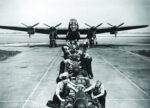
‘Second World War Bomber Command’s Path Finder Force’ – Formed in 1942 as No. 8 Group RAF under Air Vice-Marshal Don Bennett, the Pathfinders flew ahead of main bomber streams to mark and illuminate targets, dramatically improving accuracy. They pioneered advanced navigation aids and became a symbol of precision and high risk in WWII air operations.
During Covid I went on a walk and found a cross dedicated to the members of K-King who lost their lives on 16/17 December 1943. That led down a path of reading about Black Thursday and the crews who lost their lives after completing their missions. It wasn’t war that took them but fog.
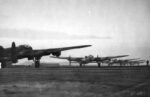

Stories Beneath Our Feet
High Bourn’s history stretches back
through farming, aviation, and wartime
service. Local historians and residents
are helping us keep those stories alive
as the future takes shape.
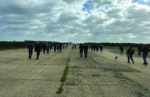
My Grandfather took off from that runway on the night of 19th May 1942, in Wellington X3472, en route to Mannheim; he didn’t get to return there for 46 years – they crash-landed in N France, and he became a PoW six weeks later following capture after a 300-mile trek with his crew mates, to the Swiss border.
Barry Love